Formaldehyde: Measuring services of the German Social Accident Insurance Institutions
Overview
Related carcinogens:
FormaldehydeType of intervention(s):
InvestigationNumber of inspections undertaken:
During Phase I, workplace measurements were performed in 57 pathology departments. During Phase II 100 pathologies were inspected by the German Social Accident Insurance Institution’s inspectors.
Duration of campaign:
Phase I: 2016-2019, Phase II: 2022-2023, Phase III: 2023-2024 (ongoing)Scope of intervention
Key duties
Workplace measurements to determine and assess exposure in Phase I and planned Phase III; inspections embedded in and coordinated with the activities of the jointed German OSH strategy work program carcinogenic substances (GDA KEGS) in Phase II
Focus of the Campaign
Determination of exposure to formaldehyde in pathology departments and assessment of the effectiveness of protective measurements.
Key findings of intervention
Positive findings
Workplace measurements in Phase I could determine the current state of the technology and the associated exposure situation in pathologies. Technical and organisational measures which can significantly reduce formaldehyde exposure have been identified. During Phase II a wide range of working conditions in German pathologies were assessed and documented. Good-practice can be deduced from these documentations and will be used for the selection of pathologies where measurements in Phase III are undertaken.
Negative findings
Pathologies in Phase I were selected by subjectively assessing the technical protection measures as adequate. Though only in 10 % of the cases was the national occupational exposure limit (OEL) (0.37 mg/m³) for formaldehyde complied with in all working areas of a pathology. During tasks of long duration involving exposure to formaldehyde, the eight-hour mean shift value exceeded the permissible OEL in up to 30% of cases. During short-term tasks the short-term exposure limit (0.74 mg/m³) was exceeded in up to 60% of cases, and in as many as 70% of cases during work without local exhaust ventilation. Elevated concentrations of formaldehyde occurred in particular where exhaust facilities were insufficiently effective, and during tasks in which formaldehyde was emitted.
Key outcomes following intervention
- Improvement in the implementation of protective technical and organizational measures to reduce and prevent formaldehyde exposure.
- Best practice examples.
Level and type of enforcement issued
- Verbal advice
- Written advice
- Improvement notice
Measurement reports were also issued.
Images
 .
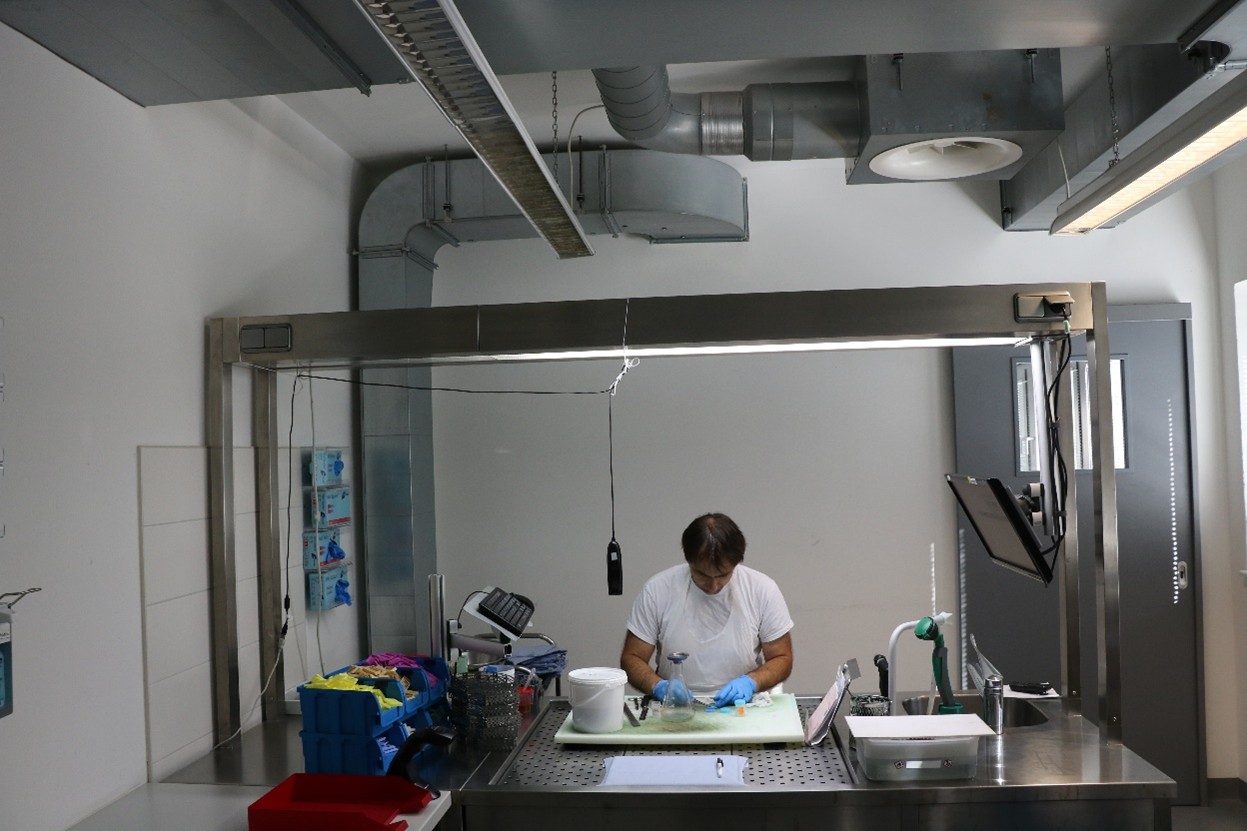
Disposal of pathology waste, workplace with good ventilation
.
Disposal of pathology waste, workplace with good ventilation