Eleven new factsheets have just been launched on the Stop Carcinogens at Work website, bringing the total number of available factsheets to 45. Together, they collect the most important information about cancer-causing substances and present it in clear, easy-to-understand language for anyone working with or around these substances.
With this latest addition, the website now hosts core information on 45 carcinogens or carcinogenic processes that are highly relevant to workplaces across Europe. Every factsheet, as well as the website itself, is available in 15 languages, making the information accessible to workers, employers, health and safety representatives, and occupational health professionals throughout the continent.
What’s in a factsheet?
Each factsheet is built around the practical questions workers and employers actually have when they encounter a hazardous substance on the job. Specifically, every factsheet includes:
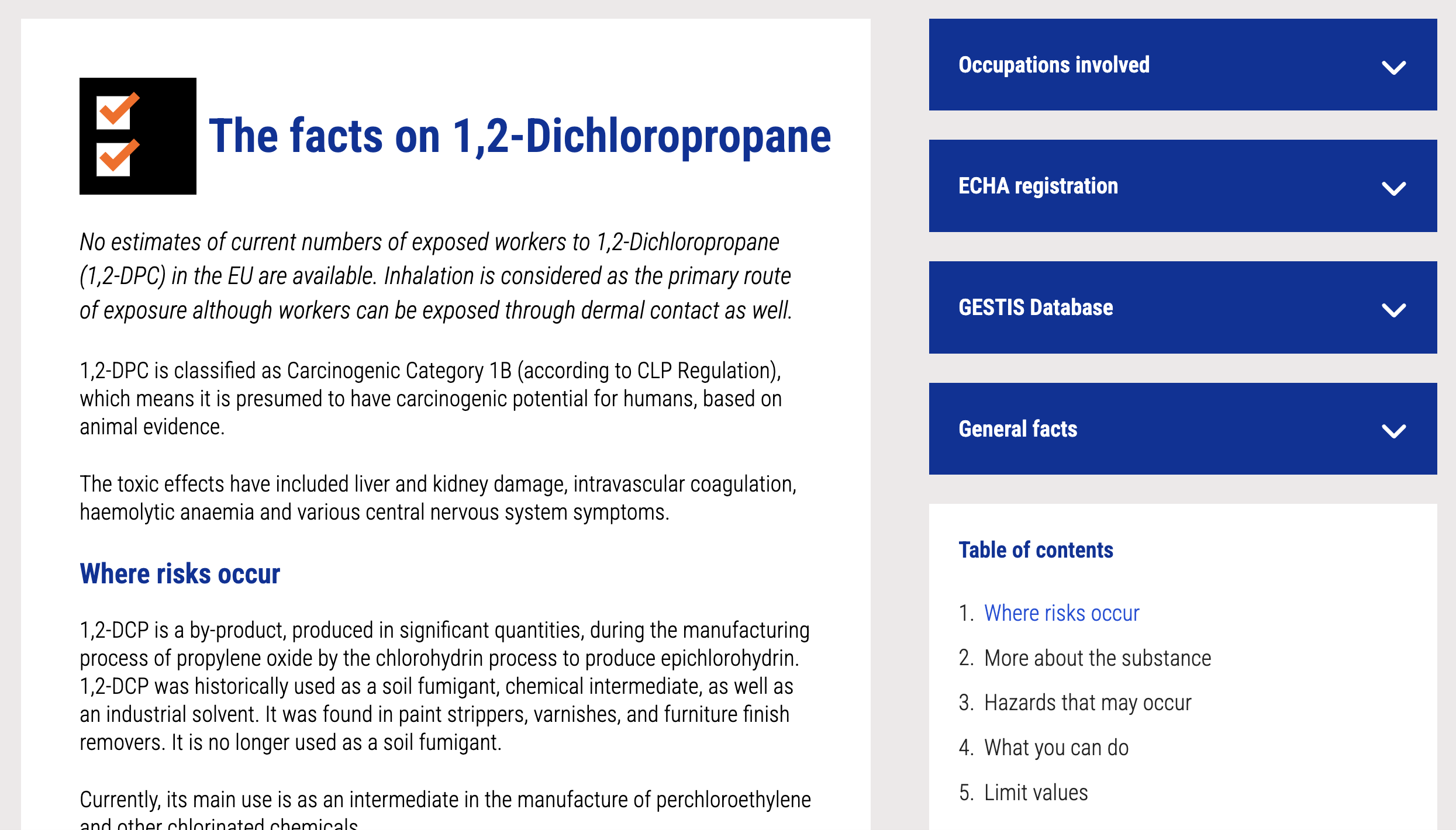
- Where the risks occur – the industries, tasks, and work processes in which exposure is most likely
- Information about the substance – what it is, where it comes from, and how it is used
- Hazards that may occur – the health effects linked to exposure, including cancer risk
- What you can do – practical prevention measures and protective steps
- Limit values – the occupational exposure limits that apply, where available
This structure is designed to give people on the shop floor, as well as those responsible for health and safety policy, a quick but thorough overview: enough to understand the danger and immediately see what action can be taken to reduce or eliminate exposure.
The 11 new factsheets
The newly published factsheets cover the following substances:
- 12-dichloropropane
- 123-trichloropropane
- Chloroprene
- Dichloromethane
- Ethylene dibromide
- Glycidyl methacrylate
- Leather dust
- O-toluidine
- Pyrocatechol
- Silicon Carbide Fibres
- Volatile organic compounds (voc)
These substances are used or released in a wide range of sectors, from chemical manufacturing and metalworking to leather processing, painting, and cleaning work. Several of them are still found in everyday industrial processes despite being classified as carcinogenic, mutagenic, or reprotoxic, which makes reliable, accessible information about them all the more important.
Why this matters
Work-related cancer remains the leading cause of work-related deaths in the European Union. Many workers are exposed to carcinogenic substances without fully realising the risks involved, or without knowing what protective measures are available to them. By translating technical and scientific data into practical, plain-language guidance, the factsheets aim to close this knowledge gap and support safer workplaces across all Member States.


